
Phase One Parts Are Ordered
The core parts for the first Offline Vault proof of concept are ordered. Here’s what’s on the way, how it will work together, and what I’ll test before tackling the battery system and finished case.
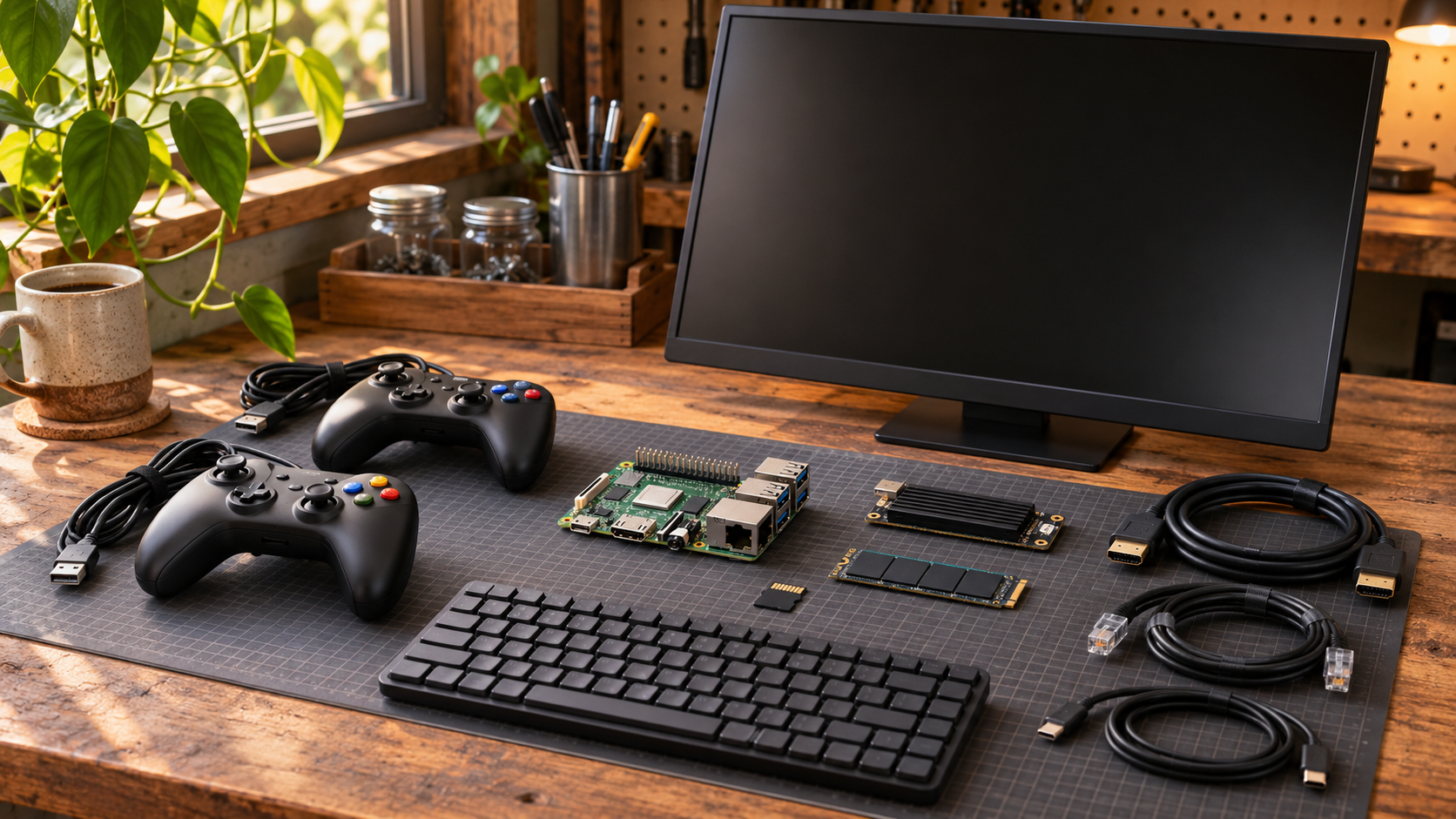
I’m excited to share that the core parts for the first Offline Vault proof of concept have officially been ordered.
This is a big step for me. Until now, The Offline Vault has been an idea I’ve been developing, researching, and working to turn into something real. Soon, I’ll have the pieces on my workbench to start bringing that idea to life.
The goal for this first build is to create a working system that demonstrates the full software stack and shows how the major components function together. It won’t yet include the battery system or the finished case. For now, it will run on external power and be assembled on a workbench. But it should take The Offline Vault from a concept to something tangible that I can interact with, test, and improve.
What’s on the way
- Raspberry Pi 5: The computer at the heart of the proof of concept.
- Active cooler: A fan and heatsink to help manage the Pi’s temperature as we test different workloads.
- 1TB NVMe solid-state drive and expansion board: Storage for the operating system and the offline content and applications we’ll test.
- 15.6-inch display: A non-touch screen for navigating and experiencing the Vault.
- Two wired game controllers: For testing games and two-player experiences without relying on controller batteries.
- USB hub: Additional connections for the controllers and other peripherals.
- Real-time clock battery: A small backup battery to help the system retain the time when it’s powered down.
- Wireless mini keyboard: A workbench tool for setup and troubleshooting, not necessarily part of the finished product.
- microSD card and reader: For preparing software and keeping a recovery option available.
- Power supplies and a display cable: The connections needed to power and assemble the workbench system.
How it comes together
The Raspberry Pi will run the software and serve as the central computer. The NVMe drive will provide local storage, so the applications and content we load onto it can be accessed without relying on an internet connection. The expansion board connects that drive to the Pi.
The display will connect to the Pi and provide the visual interface. The wired controllers will let us test navigation, games, and two-player use, while the USB hub gives us room to connect the peripherals. The keyboard will help with initial setup and troubleshooting as the software comes together.
For this phase, separate external power supplies will power the computer and display. That lets me focus first on getting the hardware and software working together before adding the more complicated battery and charging system.
What comes next
Once the parts arrive, I’ll assemble the workbench setup, install the software, and begin testing each component. I want to understand how well everything works together, where the rough edges are, and what needs to change before moving toward a more integrated prototype.
I’ll also start measuring power consumption across different activities. Those results will help guide the battery design and give us a clearer picture of what’s possible for runtime and long-term storage.
Buying a part doesn’t mean it’s approved for the final product. Each component still needs to be tested, and I expect some choices to change as I learn more. I’ll share the results, the decisions, and the surprises along the way.
For now, I’m just excited to get started. The Offline Vault is about to become something I can actually build, use, and put to the test.